
Have you ever thought about how a simple pill can turn into a big problem? Prescription drug addiction is often misunderstood because it starts with a real medical need. In fact, one in seven Americans struggles with substance abuse.
Medicines like Percocet and Xanax help with pain and anxiety but can be addictive. It’s key to spot misuse signs early. This article aims to clear up the confusion around prescription drug addiction. It offers insights for those dealing with addiction recovery.
We share stories of hope and effective ways to beat addiction. Learn how prescription drug addiction help can guide you towards recovery.
Key Takeaways
- Understanding the transition from legitimate use to addiction is key.
- Percocet and Xanax can be highly addictive if misused.
- Spotting painkiller abuse signs can save lives.
- The Walker Center offers vital programs for beating addiction.
- Long-term sobriety needs family support and ongoing help.
- Spirituality might play a big role in recovery.
Understanding Prescription Drug Addiction
Prescription drug addiction is a big problem in the United States. About 48 million people, or 20% of the population, use these drugs for reasons other than what they’re prescribed for. It’s important to know the difference between misuse and addiction. Misuse means using drugs in ways not intended, while addiction is about being physically and mentally dependent on them.
The rise in prescription drug addiction is due to several factors. Over the last 15 years, overdose deaths from these drugs have jumped by nearly 20%. Drugs like benzodiazepines, used for anxiety and seizures, are often misused. Long-term use can cause serious problems.
Stimulant abuse is dangerous, causing feelings of euphoria and increased energy. It can also lead to insomnia and high blood pressure. Opioids, like Oxycontin, can make you feel drowsy and affect your coordination. Sadly, about 46 people die every day from opioid overdoses.
It’s important to be aware of prescription drug addiction. Events like National Recovery Month 2024 and Red Ribbon Week help educate and support those affected. These resources offer valuable information and help for those struggling with addiction.
Recognizing the Signs of Addiction
Spotting addiction early is key to recovery. Knowing the recognizing addiction signs helps both the person and their loved ones act fast. Signs can show up in many ways, such as:
- Increased tolerance: Needing more to feel the same effects.
- Obsessive thoughts: Always thinking about the drug or when to take it next.
- Withdrawal symptoms: Feeling sick or emotional when they can’t get the drug.
- Neglecting responsibilities: Putting drug use before work, family, and friends.
Older adults might be more at risk because of their many medicines and health issues. Family and friends need to watch for these signs. Knowing addiction recovery tips can help guide them to the help they need.
Also, people might slip back to using drugs early in treatment. These slips can teach them about their triggers and how to handle them better. Having a supportive group can really help, even more so if there’s a family history of addiction.
By catching addiction early and getting help, people can have a better chance at recovery. Knowing the recognizing addiction signs leads to quicker help, making recovery easier for everyone.
Strategies for Long-Term Sobriety
Getting and keeping sobriety for the long haul needs a mix of strategies. It’s key to look at treatment programs, education, family support, and ways to avoid relapse.
Comprehensive Treatment Programs
Good addiction recovery programs are vital for beating prescription drug addiction. Places like Cypress Treatment Center offer detox, counseling, and life skills. This helps you build a daily routine that supports your recovery.
Programs that tackle both mind and body needs help you stay sober longer. Studies show 40-60% of people with addiction can recover with the right treatment and support.
Education and Awareness
Knowing about addiction and recovery can give you power. It helps you make better choices. Going to workshops or support groups can make your recovery better.
Learning how to cope and setting achievable goals can help you face challenges. Tools like SMART can guide you.
Family Involvement
Your family’s support is a big help in your recovery. Having them involved creates a strong support network. This is key for beating sobriety’s tough times.
Family therapy can help deal with addiction-related issues. A supportive family can motivate and encourage you, helping you stay sober.
Relapse Prevention Strategies
Relapses are part of the journey and can be a chance to learn. It’s important to have a plan for dealing with triggers. Doing fun activities and eating well can boost your health.
Connecting with others in recovery can keep you motivated. Studies show joining support groups can greatly improve your chances of staying sober.
Also, getting enough sleep and drinking water helps your mental health. Stress management through yoga and meditation can be helpful too. These strategies together create a strong support system for your recovery.
Next Steps for Support
If you think a loved one might be addicted to prescription drugs, it’s important to act. First, learn about addiction. Knowing how it works helps you talk to them with kindness and understanding. Just listening and showing you care can start a good conversation.
Encourage them to get help from a professional. Local treatment centers offer the support they need to get better. These addiction recovery resources are key to helping them find their way. Also, having family support in recovery makes a big difference.
Join support groups and family therapy. These help everyone understand each other better. Addiction recovery motivation from others can give hope. It shows that fighting addiction is something we can do together.

Building a support network is critical. These connections offer emotional and practical help. When family is involved, recovery gets stronger. This support can really motivate someone fighting addiction.
| Support Type | Description |
|---|---|
| Professional Treatment | Engagement with certified treatment centers for structured care. |
| Family Support | A complete approach that includes family in the recovery process. |
| Support Groups | Chances for shared experiences and encouragement from others. |
| Educational Resources | Books, articles, and courses to learn about addiction. |
Every step you take today helps in recovery. It changes not just one person’s life but the whole family’s. With support and understanding, we can help them through addiction recovery.
Challenges in Addiction Recovery
Recovery from addiction is tough and requires careful steps. It’s key to know these challenges if you’re on this path.
Coping Strategies in Recovery
Learning to cope is vital for success in recovery. Here are some helpful ways:
- Mindfulness practices keep you focused on the now.
- Regular exercise boosts your mood with endorphins.
- Artistic expression like painting or music helps release feelings.
These methods can reduce stress and cravings, helping you stay on track.
Addressing Trauma and Shame
Dealing with past traumas is a big part of recovery. Many feel ashamed about their past, which slows progress. Getting help, talking to therapists, and joining support groups are key.
By facing and working through trauma, you can heal and grow stronger emotionally.
Building and Repairing Relationships
Recovery often means working on relationships. Addiction can damage ties with loved ones. To fix this, focus on rebuilding trust and talking openly.
Support groups offer a community that gets what you’re going through. They can help you face challenges together.
Role of Support Groups in Recovery
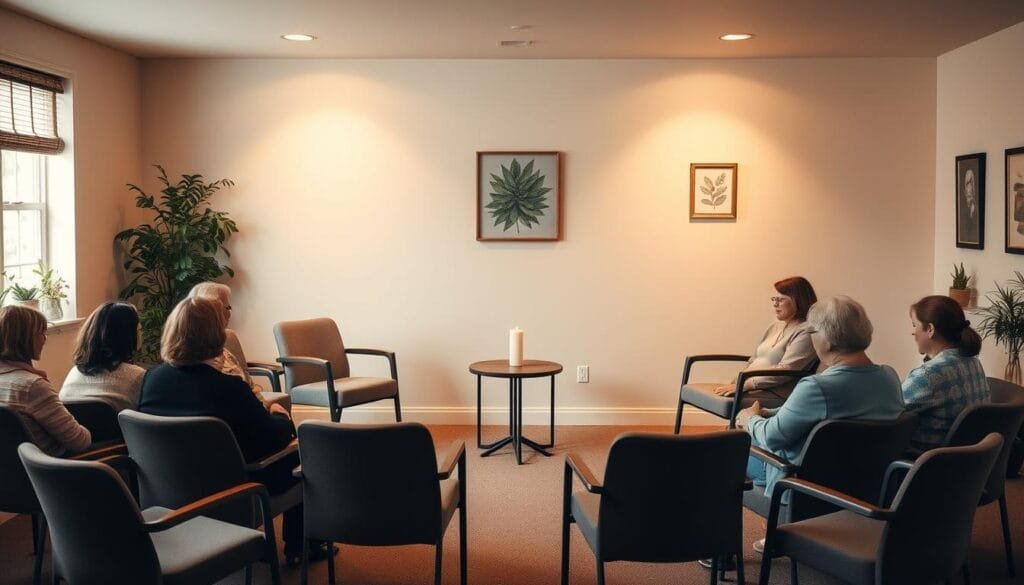
Support groups are key in helping people recover from addiction. They provide a space to share stories and learn from others. This helps reduce feelings of loneliness that often come with addiction.
Groups like Alcoholics Anonymous (AA) and Narcotics Anonymous (NA) show how peer support works. They offer different paths to recovery, like SMART Recovery and SOS. SMART Recovery focuses on self-empowerment, while SOS is non-spiritual.
Carolina Recovery Center and Caron Philadelphia’s IOP offer group therapy. These sessions teach about addiction and how to cope. They also help people understand their triggers and feelings.
Being part of these groups has many benefits. People share their stories and learn from each other. This helps them become more aware and improve their communication skills. It also helps them develop social skills needed for staying sober.
| Support Group Type | Focus | Key Features |
|---|---|---|
| Alcoholics Anonymous (AA) | Alcohol Addiction | Twelve-step program, peer support |
| Narcotics Anonymous (NA) | Narcotics Addiction | Twelve-step program, community support |
| SMART Recovery | All Types of Addiction | Four-point program, self-empowerment |
| SOS | All Types of Addiction | Secular approach, peer support |
| Caron Philadelphia IOP | Drug and Alcohol Addiction | Psychoeducation, group sessions, family support |
Exploring Inspirational Recovery Books
Inspirational recovery books are a powerful tool for those fighting addiction. They share personal stories of victory, giving hope and support. These stories help readers find strength and feel part of a community.
Personal Stories of Triumph
Books like Between Breaths: A Memoir of Panic and Addiction by Elizabeth Vargas show the link between mental health and alcoholism. Laura McKowen’s We Are the Luckiest: The Surprising Magic of a Sober Life talks about the power of self-love in beating addiction. Holly Whitaker’s Quit Like a Woman: The Radical Choice to Not Drink in a Culture Obsessed With Alcohol challenges common views on alcohol, sparking new ideas on recovery.
Insights into Overcoming Addiction
Many people find solace in books about recovery. Sarah Hepola’s Blackout: Remembering the Things I Drank to Forget shares her honest views on alcoholism, focusing on women. A Piece of Cake: A Memoir by Cupcake Brown tells her story of overcoming hard times. These stories inspire and show that change is possible.
Books like Unbroken Brain by Maia Szalavitz and Recovery: Freedom from Our Addictions by Russell Brand offer both science and personal views. Reading these stories can help your recovery, showing the value of community and emotional support. Try reading every day or join a book club. It can help you grow and stay on the path to recovery. For more self-care tips, see this resource.
Prescription Drug Addiction Recovery Blogs Insights and Inspiration
Exploring addiction recovery blogs is like finding a treasure trove of hope and guidance. These sites share real-life stories of overcoming addiction. They show the tough times and the triumphs of those on the recovery journey.
Reading about others’ successes can give you the push you need. It shows that you’re not alone in your fight against addiction.
These blogs offer practical tips and strategies for beating prescription drug addiction. They stress the value of daily reflections in staying sober and growing as a person. This practice helps you understand yourself better, including your habits and emotions.
It can also boost your determination to reach your recovery goals.
Recovery is also about community. Engaging with these blogs connects you with others who get what you’re going through. It gives you a sense of belonging and support.
One great resource is coaching programs that offer personalized support. These programs provide educational content, group therapy, and tailored treatment plans for different stages of recovery.
Intensive outpatient programs (IOPs) are becoming more popular. They offer structured care without taking you away from your daily life. IOPs combine individual counseling, group support, and educational workshops.
This setup helps you learn important coping skills while keeping your family and routine intact. It’s perfect for those facing mild to moderate challenges, as it builds a strong support network.
As you explore addiction recovery blogs, you’ll find stories of strength and hope. These stories are not just inspiring; they remind you that recovery is possible. They show that seeking help is the first step towards a healthier, sober life.
Conclusion
The journey to overcome prescription drug addiction is tough but rewarding. It needs a mix of treatments, ongoing support, and personal growth. Knowing that half of people leave treatment early, finding the right approach is key.
Spotting addiction signs and having a supportive community are essential. Hearing from those who’ve overcome addiction gives hope and practical advice. Programs that offer lasting support are vital for staying on track.
When looking for help, choose top-notch treatment centers. They provide care similar to hospitals. For more on picking the right place, check out this resource. Your dedication to recovery can lead to a better future, backed by support and inspiration.